Saturday, June 22, 2013

Sod Project 11 Newport

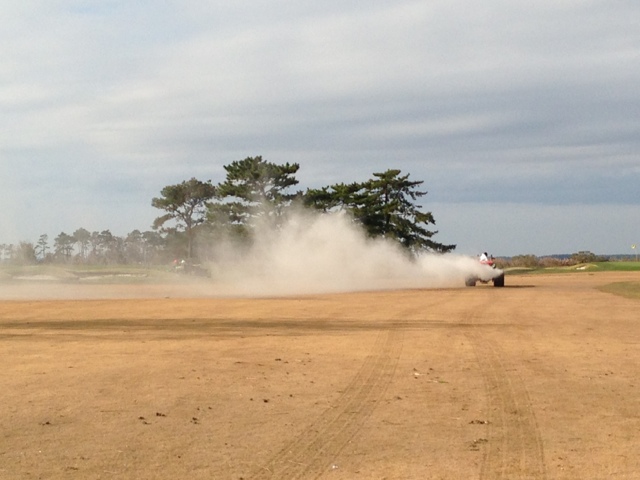
The decision has been made to repair the salt water damage on 11 Newport. Turf problems have occurred due to salt water tidal flooding and the hole was under 5 feet of water during Hurricane Sandy. 
With the absence of shade due to selective tree removal and for maximum salt tolerance, Latitude 36 Bermudagrass  sod was selected.  We will reestablish the landing area to its original shape. Most of the cool season grass that has contaminated the fairway is being replaced. 

Until the sod is rooted and established, it will be kept very wet. 11 will be roped off to cart traffic.  I anticipate a quick establishment as we are entering prime Bermuda season. We will keep you posted of our progress. We are laying 15000 square feet of sod.

Sunday, June 9, 2013

Deer Flies and Gnats


Now that we are close to summer and warm weather, the Brown Deer Fly and Gnats or No SeeUms are out in full force. The Biomist spray we have the County fog frequently is effective on mosquitoes ONLY. 
Since I am out in it every day I have found a non chemical solution. Cutter Lemon Eucalyptus Oil works effectively on these pests. You can find it in most stores. One caveat it needs reapplied frequently. 

Friday, May 17, 2013

Cart Signs and White Lines


The Board of Directors want better control of traffic and wear around the greens.  They have asked for this sign to be placed with a white line 30 or so yards from the greens.  Going forward, NO carts should be past the white line.

No carts should be off the path on PAR 3 holes.

Sunday, May 12, 2013

USGA Visit

 A week ago Wednesday we had our annual visit by Darin Bevard, Mid Atlantuc Director of the USGA. Darin is the man in charge at next months U S Open at Merion Golf Club

We toured both golf courses and he confirmed we are on the right track with a lot of our programs and improvements. He recommended we continue our aggressive management of the poa annua on Newport. He likes our attempt at balancing nutrient levels in the greens on both courses. 

He was surprised at the recovery from Hurricane Sandy. Based on what he has seen our bermudagrass is behind schedule along with other courses due to the record cold April. 

He recommended we have an arborist come in and evaluate the sudden decline of the Loblolly Pines out on the marsh holes. My own opinion is if you look at all sides of the marsh there are pines dying on everyone's property. This is a deadly trio of salt mist, age and insect damage. Observe the pines in from the marsh. They are all fine. We are looking into alternative trees on 11 and 12.

We discussed ways to get more bang for our maintenance dollar. It was time well spent. 

Tuesday, April 30, 2013

Bermudagrass Fairway Update

A couple weeks ago when it was warmer, we scalped the bermudagrass fairways.  They greened up perfectly.  Then we had a cold spell with a couple nights in the upper 30s.  This caused some of the bermuda to turn purple!


Below you can see the new green tissue.


Some fairways have round dead spots.  This is Spring Dead Spot disease.  Currently there is NO reliable treatment or protocol for this disease.  We can grow these patches back together in warm weather.


There is some Large Patch disease in a couple spots.


There are a few flooded spots from Hurricane Sandy that we are watching for possible winterkill.


Overall, the bermudagrass seems to have come through winter and the hurricane in good shape.  We are waiting for some consistently warm, sunny days to jump start the fairways with fertilizer.  I expect them to be outstanding again this season.  The continued weather pattern has allowed some growth, but  we dont want to set progress back by mowing them during this cold streak of weather.

Poa Annua Control

The picture is pretty self explanatory.  The darker green turf is creeping bentgrass.  The lighter green is poa annua.  Poa annua reproduces from seed.  Much of the explosion of poa on Newport Bay can be traced to a couple things.  First we have committed to bermudagrass fairways.  In doing this, we spray the fairways clean in the winter with RoundUp.  We preemerge them with Barricade in September to prevent poa.  There is a huge seedbed in the greens from the previous years of non control.  The second contributor is we have worked very hard to attempt to balance all of our soil nutrients.  Together with the damp weather it is truly a perfect storm.

There are some new products on the market like Xonerate and experimental product from Korea-Poa Cure.  They show a lot of promise, but they are still in their infant stage of use and development.  The problem is there is a fair amount of pow, so for the time being, we try to control seed heads and stunt it with growth regulators to allow the bentgrass as much advantage as we can.

The problem in the spring of 2013 with growth regulators is it has been much below normal temperature wise.  This has caused the growth regulators to react very differently in the plant.  Last week we had three nights in the 30s with scattered frost.  The poa annua on the Newport greens has turned bronze.  The good thing is the poa is suppressed and the green is not as bumpy as it would be without regulation.

Tuesday, February 19, 2013

Knock Out Rose Trimming

Now is the time to prune your Knock Out Roses. Never prune more than half the original height

Sunday, February 10, 2013

You Sprayed What On Newport Fairways?

This week we had a break in the weather and a couple calm days. We sprayed the Newport fairways with Roundup. Roundup at the rate of 24 oz per acre will not harm the bermudagrass. It will however kill any ryegrass or poa annua or weeds that popped up. Usually they appear in divots. We apply a preemergent in September as a poa control. The Roundup gives the fairways a clean, maintained look. It also promotes one grass type and is part of the ongoing attempt to control poa annua which is a bad problem right now on the greens. More about that in another post. So no we aren't crazy using Roundup on the fairways.

Tuesday, January 22, 2013

Newport Pond Intake Work Complete

Just because the Blog has been on mothballs does not mean we have not been busy.  As we emptied the bad water from Newport pond, we discovered the pumpstation intake was corroded and collapsing in some spots.  This intake is the aorta of the irrigation system.  The pumping down of the pond has been a double blessing.  The water in the pond WILL be suitable for irrigation (its being retested).  IF this were July and the pipe collapsed, the pumpstation would have taken in silt and fish.  We hired a company to build a new intake and repair the pipe.  While the galvanized pipe was failing in the water, when we dug up the pipe in the pond bank, it was like new.  Here is the new piping and screen
 

BEST TRASH WE FOUND AT THE BOTTOM OF THE POND:
Anyone know Gen???


Thursday, December 20, 2012

What Happened to the Newport Pond?

Once the flood water from Hurricane Sandy receded, we noticed the water foaming around our fountain. We also noticed foaming when cleaning equipment. I made a decision to have the pond water tested at a lab. The results showed the water was not suitable for fine turf irrigation. I interpreted the results and has my interpretation reviewed by the USGA. The sodium, chloride and boron levels were toxic by 100x!!! We decided to pump a majority of the water out of the pond. A combination of rain and well water should restore the pond. Remember there was at least 5-8 feet of bay water on top of the pond. A good thing came of this. Once the water level lowered we inspected the intake line. We discovered the line was made of galvanized steel and was badly deteriorated. This could cause silt, sans, eels and fish to enter and clog our irrigation system. It's much better to replace this pipe now than in July!


Thursday, December 6, 2012

Vandals Strike

Tuesday night, a group of vandals broke into our first cart barn. About 20 carts were driven out on the golf courses. They drove over and through bunkers and made donuts on 8 greens. Fortunately it's December and the greens were firm and well rooted. We applied a fungicide and some Floratine Per 4 Max to help the tracks recover. The police and forensics units were here to take prints, photos and DNA samples.


Tuesday, November 6, 2012

Storm Fallout

Some unusual fallout from Hurricane Sandy. The sheer amount of trash that flowed to the golf courses was amazing. One thing we did today was apply gypsum to the bermudagrass fairways. We hope to neutralize some of the salt from the flooding. If we had bent grass fairways or over seeded, the fairways would be dead. Talk about dirty jobs!

Tuesday, October 16, 2012

Brown Approach Edges

Some of the Newport approaches had some tan spots develop. What we discovered was the cold nights combined with growth regulator caused the bermudagrass to tan. A few warm days cleared up the problem.

Wednesday, September 12, 2012

Fall Renovations

We are in the process of fall renovations. We are overseeding Seaside fairways. We have verticut and topdressed all the greens to smooth them out and remove the puffiness that has been a problem on Seaside. Fyi we have had 18" of rain since August 1.  The insect problems with Japanese Beetle Grubs can really be seen now, exactly where insecticide was sprayed. Renovations are a temporary inconvenience. We had damage from standing water and very warm temps. The weather this week was perfect and the end result will be good. Thanks for your patience.


Tuesday, August 28, 2012

INSECTS ARE PRETTY SMART LITTLE DUDES!

As summer closes, we take time to evaluate what worked well and what didn't work so well.  An interesting happening is how smart turf insects are. In the two pictures, you can see insect damage near a green and just in the rough. The insects seem to have the ability to take up residence just outside of the area we apply insecticide.  Usually these areas show up around Labor Day. 


Tuesday, August 14, 2012

Aerification is not a bad word

Our fall aerification has begun with Newport going first. The turf is tired, beat up, worn and needs rejuvenating. I think one of the reasons our aerifications are successful is we try to preserve the turf during summer stress period. We do this by using solid rollers, slightly raising heights, rolling during hottest days and weekly Foliar feeding. We make monthly fungicide applications that are watered into our root zone which keeps the plants healthy. When we perform the aerification, the turf really responds and rebounds quickly. It looks like a mess for a little bit, but its going to be a great fall season.


Monday, July 30, 2012

Summertime Turf Blues

Summer brings a lot of stress to cool season turf.  As I mentioned before weed control is one of the trickiest applications we make.  Here is a spot spray on crabgrass that burned 7 tee Seaside.
The second photo shows proof the days are getting shorter. Bermudagrass begins to puff up and scalp.  Mowing heights are slowly raised as fall approaches.

The greens are the wettest in the summer.  The water in the soil does not evaporate much during high humidity of summer.  We are trying our best to maintain 15% moisture in the greens, but it is difficult.  The result is more susceptibility to hallmarks.  Many are going unrepaired by players.  If everyone repaired their hallmark and one additional, it would really help the greens thru the summer stress period.


Tuesday, July 24, 2012

July USGA Update

AT THE HALFWAY POINT By Darin Bevard and Keith Happ, senior agronomists, Mid-Atlantic Region July 19, 2012

Weather conditions continue to provide management challenges, but we are about halfway through the traditional summer stress period.

The story in this region continues to be the weather! Rain has occurred in some areas, but others are currently under drought conditions. Within a 30 minute drive there has been as much as a 75 percent difference in rainfall amounts since early summer. For some, the rain has been just right, not enough for others, and in rare cases far too much. When this happens in conjunction with high heat, turfgrass decline has occurred. Scald, wet wilt and water mold diseases have been a problem. It is always better to operate from a position of prevention rather than curative treatment strategies when managing pythium outbreaks. Disease pressure has been high and many superintendents have supplemented their treatment programs with conventional fungicides. Research has demonstrated that phosphites may only provide protection from pythium under moderate pressure.

There have been steady outbreaks of Hyperodes weevils this season. Damage has been limited but still there has been a need to scout and spot treat whenever damage is discovered. We are experiencing multiple generations of this insect. It is not uncommon in the same plug to see larvae, pupae and callow adults! Select the controls carefully! One specific product may not control all of the life cycles.

Playing defense has become the strategy of choice this July. The heat has been oppressive and all efforts are being made to minimize any chance of self inflicted damage. Mowing frequency on greens is being reduced and supplemented with rolling. Water is applied carefully, and the grass is being fertilized lightly to promote controlled growth. Playing defense now will make a difference when the weather is more favorable for maximizing playing quality.

Summer weeds, especially sedges, kyllinga and goosegrass have been problematic at many golf courses. Preemergent strategies have been ineffective in many instances. This may be a product of early germination due to warm spring weather. Application timing may have been too late, or pressure may be extremely high. Regardless of the reason for weed emergence, as you consider postemergent strategies, keep the health and quality of desirable grasses at the forefront. A poorly timed herbicide application under environmental stress could severely thin or even kill the turfgrass. While weed populations are unsightly, they are not nearly as unsightly as dead grass. Be sure that weather conditions are right for herbicide applications if they are needed.

Finally, the drought conditions emphasize the importance of monitoring water quality! Water levels are down and this has affected water quality not only for irrigation but also product application. Don’t assume anything. With less rain and greater reliance on wells or even potable water sources, water quality can change. Most public water has pH values in the 7.8 to 8.2 range, which can negatively impact product efficacy. Check the quality of the water to determine if spray tanks need to be buffered to maximize the effectiveness of a treatment strategy. Knowing the water quality will aid in how irrigation is applied, and if deep watering cycles are necessary to flush the profile. Syringing and light watering are being performed frequently. With these applications, salts and other detriments to turf maintenance can accumulate in the upper portion of the soil profile. If these salt levels get too high, turf performance can be affected. Again, know your water quality.

The Mid-Atlantic Region agronomists are part of your agronomic support team. If you have a question or concern, give us a call or send an email. You can reach Stan Zontek (szontek@usga. org) and Darin Bevard (dbevard@usga. org) at 610/ 558-9066 or Keith Happ (khapp@usga. org) at 412/ 341-5922.

RULES OF GOLF ETIQUETTE HANDICAPPING EQUIPMENT COURSE CARE

ABOUT THE USGA Mission History USGA Museum Leadership

GOLF RESOURCES U.S. Associations Foreign Associations The R&A International Golf Federation

CHAMPIONSHIPS

Hot Weather Be Careful!

When it is as hot as it has been, please be careful. This picture is from 10 Seaside. A soft drink or beer was spilled on the approach on a hot day.


Sunday, July 15, 2012

THE most challenging part of maintaining cool season turf.

In my opinion THE single most challenging part of our job is weed control in cool season turf.  With warm season, the weed problems exist when the turf is dormant in the winter and not actively growing.  They are simple to control.  Cool season turf however, is much more challenging.  The weed control begins in late March, early April.  You do not see the results of this for months.  Here is an example of pre emerged turf vs un pre emerged...un pre emerged is to the right.
There are instances where there MAY be an issue with a batch of product.  I do not understand all of the goosegrass on #1 and 5 fairway Seaside.  There are no sprayer skips.  Timing was correct, but there is a lot of breakthrough.  Generally I would only expect to see this in divots this time of the year.  I have a Dow Chemical factory rep coming this week to assess the situation.  The problem is how to treat the weed without damaging the desirable grasses around it.  If it is too warm, we can do even more damage than just looking at weeds. 

We have taken to a spot-spraying approach to weed control.  It is more environmentally friendly and we have less chance for damage.  However we do not spray herbicides if the temperature is expected to be above 85F.

Here are a few other difficult weeds that pop up when the cool season grasses are not actively growing and are under heat/summer stress:
GOOSEGRASS

DALLISGRASS
NUTSEDGE
KNOTWEED


Some unusual turf diseases from extreme heat...FAIRY RING
                                                EARWIG MOUNDS
MUSHROOMS FROM FAIRY RING ON GREENS

POSSIBLY A NEW BACTERIAL PROBLEM: ETILIOATION
I know many of you have seen these pop up in the last two weeks.  Some of these things are routine and some are unprecedented in my career.  You knew it was going to be a challenging year when it was 80 degrees in late February. 

I just wanted to show some of the problems we encounter and explain what is being attemted to control them.